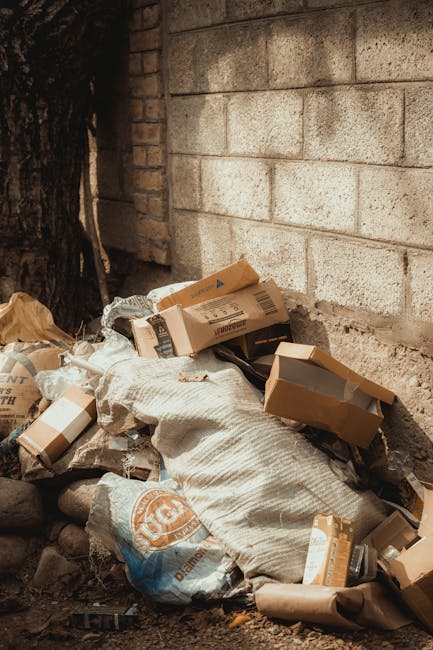
Avoid hidden rubbish removal charges in Kingston
If you have ever booked a rubbish collection and then felt that little sting when the final invoice landed, you are not alone. Hidden fees can turn a simple clear-out into a frustrating expense, especially when you are trying to keep a project moving in Kingston and just want the waste gone. This guide explains how to avoid hidden rubbish removal charges in Kingston, what to check before you book, and how to compare services without getting caught out by vague pricing or surprise extras.
Whether you are clearing a garden, emptying a loft, or dealing with builders' waste after a renovation, the same rule applies: the quote should make sense before anyone turns up. Let's face it, rubbish removal is one of those jobs people only notice when something goes wrong. The good news? A few smart checks can save you money, time, and quite a lot of hassle.
Table of Contents
- Why this matters
- How rubbish removal pricing works
- Key benefits of transparent pricing
- Who needs this and when it makes sense
- Step-by-step guidance
- Expert tips for better results
- Common mistakes to avoid
- Tools, resources and recommendations
- Law, compliance and best practice
- Options and comparison table
- Real-world example
- Practical checklist
- Conclusion
- Frequently asked questions
Why Avoid hidden rubbish removal charges in Kingston Matters
Hidden charges are more than an annoying surprise. They can distort your budget, delay your plans, and leave you comparing services on the wrong basis. A cheaper-looking quote is not really cheaper if the final bill grows once the team arrives, starts loading, or discovers the job is "heavier than expected".
In Kingston, where homes, flats, small businesses, and building projects all sit close together, rubbish removal often needs a bit of planning. Access can be tight, parking can be awkward, and waste types can vary a lot from job to job. A provider that is vague about pricing may be hoping you will not ask the awkward questions until it is too late. You should ask them early. All of them. Yes, even the slightly tedious ones.
Clear pricing also matters for trust. When a company explains exactly what is included, you can make a proper comparison and choose the right option for your waste type, your access, and your timescale. That is especially important if you are weighing up a skip, rubbish removal, or something more tailored like wait and load skip hire.
Practical truth: the best way to avoid hidden rubbish removal charges is not to hunt for the lowest headline price. It is to get a quote that clearly matches the actual job you need done.
How Avoid hidden rubbish removal charges in Kingston Works
In simple terms, rubbish removal pricing is usually built from a few moving parts: the volume of waste, the type of waste, how easy it is to collect, whether labour is included, and whether any extra permissions are needed. Most surprise charges happen when one of those parts was not discussed properly at the start.
Here is how the process normally unfolds. First, you describe the waste as accurately as you can. Then the provider estimates the load, the manpower, and the vehicle or container needed. After that, they may ask about access, stairs, parking, or restricted items. If you skip those details, you may end up paying more later. It is a bit like ordering a takeaway and forgetting to mention you actually need enough food for six people. Close enough is not close enough.
For bigger or mixed waste jobs, some customers compare alternatives such as grab hire services, man and van, or a standard skip hire booking. Each works differently, so the cheapest-looking option may not be the most economical once all the practical details are included.
Hidden charges usually appear in one of these places:
- extra labour for carrying waste from difficult access points
- added cost for restricted materials or heavy items
- permit or parking-related charges
- extended waiting time
- changes to the estimated volume or weight
- collection outside standard hours
If a provider cannot explain which of those might apply, that is your cue to slow down. No rush. Better to ask now than argue later.
Key Benefits and Practical Advantages
Transparent rubbish removal pricing is not just about saving money. It improves the whole experience, from the first phone call to the final sweep-up. And yes, there is something deeply satisfying about knowing exactly what you are paying for before the lorry arrives.
The main benefits include:
- Budget control: You can plan the full cost instead of guessing.
- Faster decisions: Clear quotes make comparisons much easier.
- Less stress: You are not worrying about "extras" appearing at the end.
- Better service fit: You can choose between skip hire, collection, or load-and-go based on the job.
- More accurate scheduling: The provider can bring the right vehicle, team, and equipment.
For businesses, transparent costs help with procurement and job margins. For homeowners, they stop a simple clear-out becoming a headache. For tradespeople, they keep project timelines tidy. If you are comparing services for a renovation or site clean-up, it can also help to review related options like builders skip hire or construction waste disposal.
One small but important advantage: clear pricing usually signals a better organised company. Not always, but often enough that it is worth paying attention.
Who This Is For and When It Makes Sense
This matters for anyone in Kingston who wants waste removed without a messy pricing surprise. That includes homeowners, landlords, tenants, builders, office managers, shop owners, and anyone dealing with a one-off clear-out.
It makes particular sense if you are dealing with:
- a house clearance after a move or bereavement
- a loft, garage, or shed that has quietly filled up over years
- garden waste after a big tidy-up
- building rubble or renovation debris
- commercial waste from an office, retail unit, or storage space
If the job is sensitive, bulky, or time-critical, the risk of extra charges goes up. Think about items like appliances, mattresses, mixed construction waste, or hard-to-access properties. Services such as house clearance, garage and loft clearance, and garden waste removal can all be priced fairly, but only if the provider has enough detail.
And if your waste is unusual or needs special handling, it is better to talk about it upfront than to assume it will be "sorted on the day". That phrase, frankly, causes trouble.
Step-by-Step Guidance
Here is a practical way to protect yourself from hidden rubbish removal fees. Keep it simple and ask the questions in order. It does not need to be awkward.
- Describe the waste clearly. Say what you have, how much there is, and whether it is loose, bagged, broken down, or stacked.
- Separate the waste type. General rubbish, green waste, builders' waste, appliances, and hazardous items are often priced differently.
- Check access. Mention stairs, narrow lanes, long walks from the property, controlled parking, or any loading restrictions.
- Ask what is included. Labour, loading, disposal, recycling, and VAT should all be clear.
- Ask what could cost extra. You want the "if this happens, what then?" answer before the job starts.
- Confirm timing and waiting rules. This matters most for rush jobs and same-day clearances.
- Get the quote in writing. A written summary reduces misunderstandings. Plain and simple.
- Read the terms before you agree. Especially anything about cancellation, access issues, oversize loads, or prohibited waste.
If you are still deciding which service style fits best, browse the provider's skip sizes and prices information alongside their pricing and quotes page. That combination often tells you more than a headline offer ever will.
Tip: if a quote is given very quickly without any real questions, be cautious. Speed is nice. Accuracy is nicer.
Expert Tips for Better Results
In our experience, the clearest quotes come from the clearest brief. That sounds obvious, but people often undersell the size of the job. A few extra bags, one awkward item, or a longer carry distance can change the logistics more than you might expect.
Here are the habits that help most:
- Take photos from a few angles. A couple of clear images often help more than a long explanation.
- Measure large items. Sofas, appliances, and fitted materials can be deceptive.
- List anything heavy. Soil, rubble, bricks, and tiles can change the loading plan.
- Be honest about access. If there are stairs or no driveway, say so early.
- Ask whether loading time is capped. Some collections are priced on time, some on load size, some on both.
- Check if recycling is included. Responsible disposal can affect the price, but it also affects what happens to your waste afterwards.
Another useful habit is to ask whether the service is suited to your exact waste stream. For example, mixed renovation debris is not the same as office paper and confidential records. A service like confidential shredding or office clearance may be more appropriate for some jobs than a general collection.
Also, if you have any item that might need special treatment, ask about it specifically. Fridges, freezers, mattresses, sofas, and anything classed as hazardous need extra care. No shortcuts, please. That is where surprise fees often hide.
Common Mistakes to Avoid
Most bad pricing experiences come from a handful of predictable mistakes. Avoid these and you are already ahead of the game.
- Only asking for the cheapest price. Cheap quotes can exclude labour, disposal, or access charges.
- Giving vague waste descriptions. "Just some rubbish" is not enough.
- Ignoring access issues. A second-floor flat with no lift is very different from a driveway collection.
- Forgetting restricted items. Appliances, mattresses, and hazardous waste can alter the cost.
- Not checking permit needs. If a skip goes on the road, you may need permission. More on that below.
- Skipping the terms and conditions. Boring, yes. Useful, absolutely.
Another common slip is comparing a skip-only offer with a full labour-inclusive collection. They are not the same thing, even if the final totals look similar at first glance. If you are unsure, compare similar services like domestic skip hire and man and van on the same basis: what is included, what is excluded, and how much hassle each one saves you.
Truth be told, most people do not need the most elaborate service. They just need the right one. Simple job, simple pricing.
Tools, Resources and Recommendations
You do not need a complicated toolkit to avoid hidden charges. A phone camera, a rough waste list, and a few smart questions will do most of the heavy lifting.
Here are the most useful things to prepare before requesting a quote:
- a short description of the waste
- photos of the load, access route, and parking area
- the post code and collection location details
- your preferred date and time window
- any item that may need special handling
- your decision on whether you want labour included
It also helps to understand the service format you are buying. If you need speed, same-day skip hire may be relevant. If access is tight and the load is ready to go straight away, wait and load skip hire can sometimes make more sense than leaving a skip on-site. If you need bulky material lifted from a difficult area, grab lorry hire may suit the job better.
For environmentally minded customers, it is worth asking how a provider handles sorting and recycling. A good recycling and sustainability policy is not just nice wording; it often reflects a more organised operation overall.
Law, Compliance, Standards, or Best Practice
Waste removal in the UK comes with responsibilities. You do not need to be a legal expert, but you should know the basics. Waste must be handled by a competent carrier, and different waste streams have different expectations around transport, disposal, and segregation. If you are disposing of items that could be classed as hazardous, it becomes even more important to ask the right questions.
For customers, the safest practical approach is to use a company that is transparent about how it handles waste, what it will and will not take, and how pricing changes if the load turns out to be different from what was described. That is where a provider's what can go in a skip guidance becomes genuinely useful. It helps you avoid prohibited items that can trigger additional fees or rejected loads.
If a skip is being placed on public highway space, permit requirements may apply. In that case, review the provider's information on skip hire permits or skip permits before booking. These fees are not usually "hidden" in the deceptive sense, but they can surprise people if they are not discussed early enough.
Best practice is straightforward:
- describe your waste honestly
- check whether any item is restricted
- confirm the pricing basis in writing
- ask about parking, access, and waiting time
- read the terms before agreeing to collection
That may sound a bit formal, but it keeps everything tidy. And tidy is good.
Options, Methods, or Comparison Table
Different waste jobs need different solutions. The right option depends on volume, access, time pressure, and how much labour you want included. Here is a straightforward comparison.
| Option | Best for | Typical strength | Possible watch-out |
|---|---|---|---|
| Rubbish removal | General clear-outs, bulky items, mixed household waste | Convenient, labour is often included | Extra charges can appear if access or waste type is not explained |
| Skip hire | Projects where waste will build up over time | Good for ongoing work and larger volumes | Permit costs, prohibited items, overfilling rules |
| Wait and load | Fast clearance where space is tight | Useful if you cannot keep a skip on site | Needs everything ready and accessible |
| Grab lorry hire | Bulk waste, soil, rubble, garden material | Efficient for heavy loose loads | Requires room for the vehicle and clear loading access |
| Man and van | Smaller mixed loads, flexible collections | Handy for one-off jobs and lifting support | Pricing may depend on time, volume, and carrying distance |
If you are unsure, compare the service style first and the price second. That order matters more than people think.
Case Study or Real-World Example
A Kingston homeowner was clearing a garage after years of storage. At first glance, it looked like "just a few old bits": paint tins, broken shelving, a mattress, some garden rubble, and a stack of damp boxes. Fairly ordinary, really. But the mix mattered.
Instead of asking for a generic collection, the customer listed each item, sent a few photos, and explained that the garage sat at the back of a narrow drive. The provider could then explain which items were standard, which were restricted, and how access would affect the work. The final quote was not the absolute lowest on paper, but it was honest. No surprises, no awkward phone calls halfway through the job, no "oh, that'll be extra" moment at the kerbside.
That same approach also works for trade waste. A small builder in Kingston might need builders waste removal after a kitchen rip-out, while a larger project may need construction waste clearance or even site clearance. The pattern is the same: clearer information leads to cleaner pricing. Simple, but easy to overlook when you're busy.
Practical Checklist
Use this checklist before you book. It is short on purpose.
- Have I described the waste clearly?
- Have I listed all bulky, heavy, or unusual items?
- Have I explained access, stairs, parking, and loading distance?
- Do I know whether labour is included?
- Have I asked what could trigger extra charges?
- Do I understand any permit or placement costs?
- Have I checked what cannot go in the load?
- Have I asked whether VAT is included in the price?
- Have I received the quote in writing?
- Have I read the terms and conditions?
If you tick all ten, you are in a strong position. If you miss one or two, go back and ask. No drama.
Conclusion
Avoiding hidden rubbish removal charges in Kingston comes down to one thing: clarity before collection. The more accurate your description, the better the quote. The more detailed the quote, the less likely you are to be hit by surprise fees, delays, or awkward on-the-day changes.
Take a moment to compare service styles, ask about access and item types, and choose a provider that explains pricing in plain English. Whether you need a quick household collection, a larger trade clear-out, or a tailored option like skip hire or grab hire, transparency is what keeps the job calm and manageable. And honestly, calm is underrated when there is waste stacked by the door.
Get a free quote today and see how much you can save.
With the right questions asked early, you can get the mess cleared and keep your budget intact. That is a decent result, all things considered.
Frequently Asked Questions
What counts as a hidden rubbish removal charge?
A hidden charge is any extra cost that was not made clear before the booking, such as added labour, waiting time, access difficulties, item restrictions, or permit-related fees.
How do I compare rubbish removal quotes properly?
Compare like with like. Check what is included, whether labour is covered, what waste types are accepted, and whether the price changes for access issues or heavy items.
Why do some quotes look much cheaper at first?
Some quotes only cover the basic collection and exclude things like loading, disposal, or additional handling. A lower headline price can be misleading if the extras are added later.
Should I send photos before I book?
Yes, if you can. Photos help the provider estimate volume, spot difficult access, and identify restricted items. It usually makes the quote more accurate.
Do I need to mention if the property has stairs or no driveway?
Definitely. Access is one of the biggest reasons for extra charges. Stairs, long carrying distances, and tight parking can all affect the cost.
Can bulky items such as sofas or mattresses cost more?
They can, especially if they need special handling or disposal. It is best to name them upfront and ask whether they are included in the standard price.
What should I ask before agreeing to a collection?
Ask what is included, what could cost extra, how access affects the price, whether VAT is included, and whether any items are restricted or need special treatment.
Is skip hire better than rubbish removal for avoiding surprises?
Not always. Skip hire can be very clear for ongoing projects, while rubbish removal can be better when you want labour included. The best option depends on the job and access.
Do permits ever affect the final price?
Yes. If a skip needs to be placed on the road, permit requirements may apply. That cost should be discussed in advance so it does not become a surprise later.
What is the safest way to avoid extra charges on the day?
Give a full description of the waste, confirm access details, get the quote in writing, and read the terms before booking. That simple routine prevents most problems.
Can I use rubbish removal for construction waste?
Yes, in many cases, but the waste type matters. Builders' waste, rubble, and mixed construction debris may need a specialist service such as builders waste removal or construction waste clearance.
Where can I check pricing and service details before booking?
It helps to review the provider's pricing and quotes, skip sizes and prices, and what can go in a skip guidance before making a decision. That gives you a much clearer picture of the true cost.